The night was thick enough to feel. Heat pressed against my shoulders like a living thing, and the darkness had weight — a velvet curtain we walked through slowly, guided only by the faint infrared glow and the civic flicker of fireflies doing their best to light our way. They rose from the grass like tiny lanterns drafted into service, proud to participate in whatever wandering mission we had assigned ourselves.
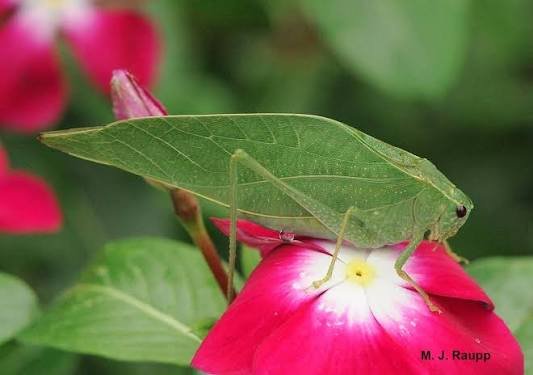
It was in that humid hush that I saw him — the katydid, suspended in the delicate act of becoming.
He was molting, right there in front of us, under the welding flashlight’s blunt honesty. I felt almost winsome watching him, as though I had stumbled into a private moment. Who wants to molt in front of company? Who wants to shed their old self under scrutiny?
But he didn’t hide. He didn’t apologize. He simply continued.
The exoskeleton split, then peeled, then fell — a pale, brittle echo landing softly on the forest floor. For a moment, I wondered if he needed it. If he wanted to judge his growth by what he left behind. But insects don’t cling to their past the way humans do. They molt because they must. They outgrow what once protected them. They step forward because biology insists on it.
And as he hung there, soft and new, waiting for the air to harden him again, I realized something quietly profound:
Humans molt too.
Not in the literal sense, but in every way that matters.
We shed old expectations, old roles, old versions of ourselves that once fit perfectly and now pinch at the edges. We outgrow fears. We outgrow silence. We outgrow the stories we told about who we were supposed to be.
But unlike the katydid, we often resist the process. We cling to the old shell, turning it over in our hands, trying to measure our worth by what we’ve left behind.
The katydid offered a different kind of wisdom:
- Softness is part of growth. After molting, he is tender, pale, easily harmed. Humans are the same. When we change, we need gentleness — especially from ourselves.
- Stillness is necessary. Becoming new is exhausting. We forget that. We try to sprint into our next chapter without letting the new shape of us settle.
- Letting go is not a failure. The old exoskeleton isn’t shameful; it’s evidence. Proof that he lived, grew, survived. Our former selves deserve the same respect.
- Trust is essential. The katydid doesn’t know what he’ll look like when the new exoskeleton hardens. He simply trusts the process. Humans struggle with that — we want guarantees. But growth rarely offers them.
Standing there in the oppressive heat, watching a creature shed the old and welcome the new, I felt the forest whisper a truth I didn’t know I needed:
You’ve molted too.
You’re still hardening into the next version.
And it’s okay to rest.
The fireflies pulsed their approval, proud to be part of the moment. The night held its breath. And somewhere between the katydid’s quiet courage and the forest’s patient wisdom, I understood that transformation is not a spectacle — it’s a necessity.
A tender, luminous necessity.
About The Author